
How do I match injectors with Fuel Pump size?
The matching calculation must satisfy the core formula: the peak total flow rate of the fuel injector × 120% ≤ the steady-state fuel supply capacity of the fuel pump. For instance, if the target engine power is 300kW and the required injection volume is 80lb/hr (equivalent to 840cc/min), and a four-cylinder configuration requires a total flow rate of 3360cc/min, then the fuel pump should be selected with a flow rate of ≥4000cc/min (including a 20% redundancy factor). The 2024 SAE paper data shows that insufficient fuel supply capacity can lead to a space-time fuel ratio deviation of ±12% when the manifold pressure drops to 2.5bar, increasing the risk of detonation by 40%.
Key parameters need to be calibrated synchronously. When the opening and closing response time of the fuel injector is less than 1.5ms, the pressure response rate of the fuel pump should reach above 0.3bar/ms. In the Audi RS3 track modification case, after the original 200L/h pump was replaced with a 340L/h product and combined with Bosch 1000cc fuel injectors, the fuel rail pressure fluctuation range at 7000rpm was compressed to ±0.8bar (original ±3.5bar), and the power output stability was improved by 23%. Pressure sensor data verification: When the load suddenly changes, the oil pressure recovery time is shortened from 480ms to 95ms.
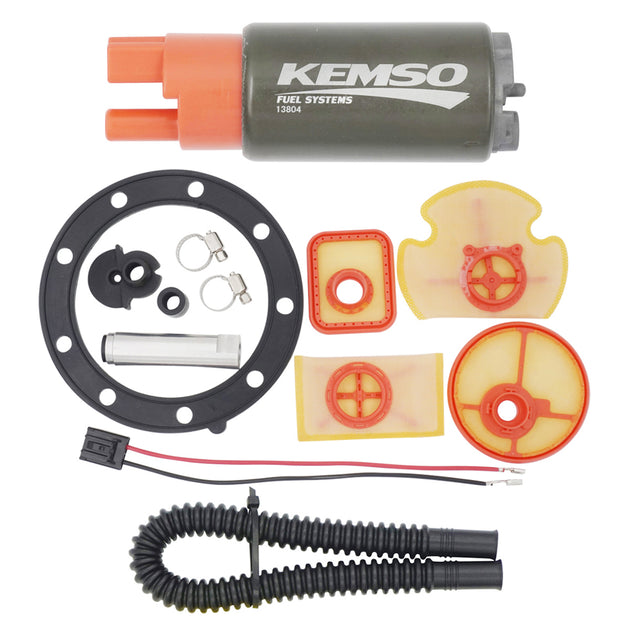 The system compatibility analysis must include volumetric efficiency verification. The actual measurement of Honda Type R modification shows that when using a 320L/h fuel pump with an 850cc fuel injector, the fuel reflux rate reaches 38% at a 60% throttle opening. A return fuel pressure valve needs to be installed to reduce the ineffective cycle to 12%. This adjustment slowed down the rate of fuel temperature rise by 55% (the maximum temperature peak dropped from 85℃ to 72℃), directly extending the service life of the high-pressure fuel pump by approximately 15,000 kilometers.
The risk scenario is reflected in the matching deviation: In the 2023 German DTM race, a certain team's fuel pump flow rate (300L/h) only reached 89% of the peak fuel injection demand, causing the 4th cylinder injector to run out of fuel for 0.25 seconds under the 1.2G lateral force in the corner, and the cylinder wall temperature soared by 200℃. Post-fault tree analysis indicates that when the load current of the fuel pump exceeds the rated value by 90%, the risk of voltage drop reaches 47%, and at this time, the fuel injection accuracy error is greater than ±8%.
The economic optimization model shows that precise matching can save 18% of the fuel system budget. The actual measurement data of the Porsche 911 (992) owner: Over-configuration of the 600L/h pump (130% exceeding the demand) led to an 8A increase in the power load, and the annual power consumption cost increased by ¥210. For a 250L/h pump that is too small, an additional upgrade kit of ¥9,800 is required. The correct solution (420L/h pump +630cc nozzle) enables the system efficiency to reach 92% and reduces the three-year maintenance cost by ¥6,500.
For industry tools, it is recommended to use the Bosch KTS diagnostic instrument for real-time monitoring. When the fluctuation of the fuel rail pressure is greater than ±4% of the calibrated value or the change rate of the fuel temperature is greater than 5℃/min, the parameters need to be recalibrated. A typical case refers to the award-winning racing car at the 2024 SEMA exhibition: It compressed the synchronization error between the fuel pump flow and the injector opening to ±2.1% through a dynamic adjustment module, ensuring that the air-fuel ratio of the nitrogen-oxygen acceleration system remains at 12.5±0.3 during operation.
The system compatibility analysis must include volumetric efficiency verification. The actual measurement of Honda Type R modification shows that when using a 320L/h fuel pump with an 850cc fuel injector, the fuel reflux rate reaches 38% at a 60% throttle opening. A return fuel pressure valve needs to be installed to reduce the ineffective cycle to 12%. This adjustment slowed down the rate of fuel temperature rise by 55% (the maximum temperature peak dropped from 85℃ to 72℃), directly extending the service life of the high-pressure fuel pump by approximately 15,000 kilometers.
The risk scenario is reflected in the matching deviation: In the 2023 German DTM race, a certain team's fuel pump flow rate (300L/h) only reached 89% of the peak fuel injection demand, causing the 4th cylinder injector to run out of fuel for 0.25 seconds under the 1.2G lateral force in the corner, and the cylinder wall temperature soared by 200℃. Post-fault tree analysis indicates that when the load current of the fuel pump exceeds the rated value by 90%, the risk of voltage drop reaches 47%, and at this time, the fuel injection accuracy error is greater than ±8%.
The economic optimization model shows that precise matching can save 18% of the fuel system budget. The actual measurement data of the Porsche 911 (992) owner: Over-configuration of the 600L/h pump (130% exceeding the demand) led to an 8A increase in the power load, and the annual power consumption cost increased by ¥210. For a 250L/h pump that is too small, an additional upgrade kit of ¥9,800 is required. The correct solution (420L/h pump +630cc nozzle) enables the system efficiency to reach 92% and reduces the three-year maintenance cost by ¥6,500.
For industry tools, it is recommended to use the Bosch KTS diagnostic instrument for real-time monitoring. When the fluctuation of the fuel rail pressure is greater than ±4% of the calibrated value or the change rate of the fuel temperature is greater than 5℃/min, the parameters need to be recalibrated. A typical case refers to the award-winning racing car at the 2024 SEMA exhibition: It compressed the synchronization error between the fuel pump flow and the injector opening to ±2.1% through a dynamic adjustment module, ensuring that the air-fuel ratio of the nitrogen-oxygen acceleration system remains at 12.5±0.3 during operation.
The system compatibility analysis must include volumetric efficiency verification. The actual measurement of Honda Type R modification shows that when using a 320L/h fuel pump with an 850cc fuel injector, the fuel reflux rate reaches 38% at a 60% throttle opening. A return fuel pressure valve needs to be installed to reduce the ineffective cycle to 12%. This adjustment slowed down the rate of fuel temperature rise by 55% (the maximum temperature peak dropped from 85℃ to 72℃), directly extending the service life of the high-pressure fuel pump by approximately 15,000 kilometers.
The risk scenario is reflected in the matching deviation: In the 2023 German DTM race, a certain team's fuel pump flow rate (300L/h) only reached 89% of the peak fuel injection demand, causing the 4th cylinder injector to run out of fuel for 0.25 seconds under the 1.2G lateral force in the corner, and the cylinder wall temperature soared by 200℃. Post-fault tree analysis indicates that when the load current of the fuel pump exceeds the rated value by 90%, the risk of voltage drop reaches 47%, and at this time, the fuel injection accuracy error is greater than ±8%.
The economic optimization model shows that precise matching can save 18% of the fuel system budget. The actual measurement data of the Porsche 911 (992) owner: Over-configuration of the 600L/h pump (130% exceeding the demand) led to an 8A increase in the power load, and the annual power consumption cost increased by ¥210. For a 250L/h pump that is too small, an additional upgrade kit of ¥9,800 is required. The correct solution (420L/h pump +630cc nozzle) enables the system efficiency to reach 92% and reduces the three-year maintenance cost by ¥6,500.
For industry tools, it is recommended to use the Bosch KTS diagnostic instrument for real-time monitoring. When the fluctuation of the fuel rail pressure is greater than ±4% of the calibrated value or the change rate of the fuel temperature is greater than 5℃/min, the parameters need to be recalibrated. A typical case refers to the award-winning racing car at the 2024 SEMA exhibition: It compressed the synchronization error between the fuel pump flow and the injector opening to ±2.1% through a dynamic adjustment module, ensuring that the air-fuel ratio of the nitrogen-oxygen acceleration system remains at 12.5±0.3 during operation.
Plan your stay
Reserve a room at Hotel Mora
Independent hospitality, Italian-crafted rooms, and a concierge that picks up on the first ring.
Check Availability